




Three Telegram accounts are online at the same time. A customer first asks about shipping time in Chinese, then a few minutes later adds a question about size in English; the operator switches back and forth between the translation window and the chat window, and by the time this line is translated, they can no longer recall which account the customer came in through or who replied to the previous line.
Conclusion first: two-way translation tools such as 海象双向聊天翻译软件 are sufficient forone-on-one private chats with a single account or a few accounts— you can understand the foreign language a customer sends, reply in the customer's language, and compare against the original text; it is also sufficient for“understanding what others are saying” in multilingual groupsBut as soon as multiple accounts are running in parallel, group inquiries need to be followed up by different people, and handovers span days and people, what it covers is only the language part; account attribution, customer profiles and handover records need another solution. The following sections draw that dividing line scenario by scenario. Note: this article does not verify or evaluate the features, pricing or results of any third-party tool. The judgments below apply to the category of “two-way translation” tools; exactly how far 海象双向聊天翻译软件 can cover needs to be checked item by item against its actual feature list.
The search term “海象双向聊天翻译软件” actually corresponds to three different tasks
Behind the same search term are three different gaps. The first is single-sentence translation: copy a piece of foreign text into a translation box, understand it, and that's it—no reply involved. The second is real-time two-way translation within a chat window: whatever language the customer writes in, you see the translation in the same window and can reply in their language. The third adds another layer on top of the first two: translations need to stay attached to account ownership, customer language preferences, and follow-up tasks.
There's a simple way to tell which category you fall into: think back to the last time something went wrong—was it “I couldn't understand it,” or “I understood it but replied from the wrong account, in the wrong language, and had to translate it all over again during handover”? For the former, improving translation capability is enough; for the latter, what's needed is message aggregation and customer management.A layered explanation of multi-platform chat translation and customer communicationThese three layers of needs can be broken down further for comparison and positioning.
Scenario one: tg real-time translation chat in Telegram private messages—first see whether the translation can follow the conversation
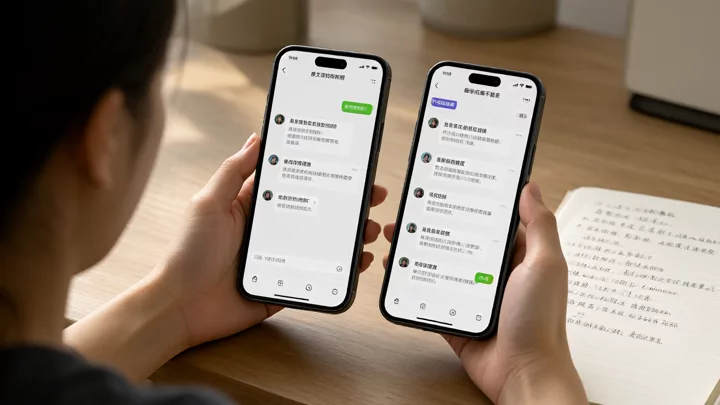
Telegram private messages are the most error-prone type of “one-to-many” communication: the same customer may ask about the same thing from two accounts at once, or mix Chinese and English in a single message. Here, “real-time” is not just about low latency—it's about whether the translation follows the conversation. There are three minimum requirements:
- Two-way sending and receiving: the language the customer sends can be translated into Chinese, and the Chinese you type can be translated into the language the other party is accustomed to—rather than only being able to read and not reply.
- Source text available for comparison: the source text can be reviewed alongside the translation, so when the customer mentions a model number, address, or amount, you don't need to open another window to verify it.
- Translations still match the right person after switching accounts: after switching from account A to account B and back again, the historical translations remain attached to the original customer's conversation.
两个可以立即执行的自测动作:找一条真实消息,故意中英混用,观察工具是整段生硬翻译,还是能分句处理;然后连续切换两次账号,再回看历史记录,如果译文与原文错位,或分不清属于哪个账号,说明它只做了单窗口翻译。这里的判断顺序,可与Cross-border conversations: the four steps of bidirectional translation互相参照;账号一多,还要同时看消息聚合是否成立,可参考Telegram 多账号消息聚合的落地要点。
场景二:多语言群组,翻译要能分清谁在说话
群聊和一对一私聊不是同一类问题。在一个几十人的多语言群里,消息来自不同人,话题又互相交叉,翻译本身没问题,麻烦在于分不清谁在问什么、哪条咨询值得单独跟进。判断点很具体:能不能识别说话人,能不能把某一条咨询从群消息里单独拎出来。
更稳妥的做法是设一条转场规则:群里出现明确的价格、库存、售后咨询,就引导到私聊单独承接,群里只做公开答复。原因不是工具限制,而是群消息天然缺少“这位客户由谁负责”的归属信息,越早转到一对一会话,后面跟进越省事。所以群组场景的回答是:双向翻译能解决“看懂”,剩下的“谁在问、归谁跟”仍需靠转场规则补上。
场景三:从私聊咨询转成工单,交接时必须带走的四个字段
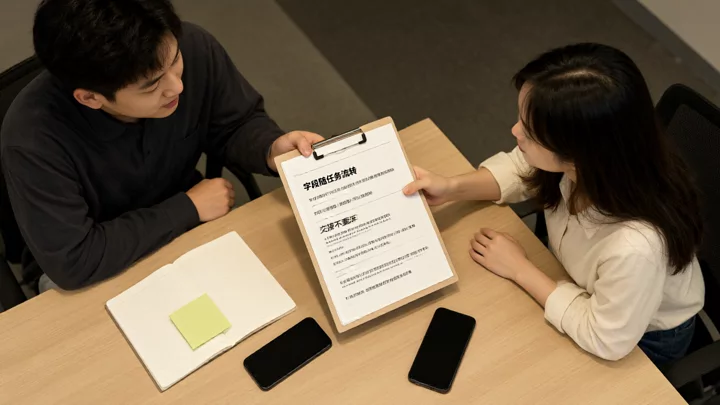
双向翻译解决“看得懂”,工单解决“接得住”。把一条私聊咨询转成可跟踪的任务时,必须带走四项信息,缺一项就要在交接时重来:
- Source account:It is immediately clear which Telegram account this inquiry came in through and which identity was used to reply.
- Customer language preference:If the customer asked in English, the next person taking over should not reply directly in Chinese.
- Link between source text and translation:The customer's original words and the translation at the time are kept together, so revised wording and agreed terms can be reviewed.
- Next action and owner:Whether it is a quote, additional information, or waiting for the customer's reply, it must be assigned to a specific person.
Nor does every item need a ticket. For conversations that are resolved in one exchange, creating a ticket only makes the list grow longer. The criterion is “whether a second person needs to take over or follow-up is needed across days”: create one if needed; if not, leave it in the conversation.How the ticketing system links messages with customer managementIt contains a more complete field list. Also a reminder: operations involving proactive customer acquisition should comply with Telegram platform rules and local regulations; practices such as mass messaging and bulk adding contacts are outside the scope of this article.
Which scenarios can be handled with two-way translation alone, and which must add aggregation and customer management
| Typical scenarios | What bidirectional translation can solve | What may still be missing | Recommended additional actions |
|---|---|---|---|
| Single-account, single-language pre-sales Q&A | Understand the question and reply in the other party's language | Almost no gaps | Keep the source text for reference |
| Multi-account private chats with customers mixing Chinese and English | Understand and reply in real time, with the source text available for review | Correspondence between translations and account ownership | Review history after switching accounts to confirm nothing is misaligned |
| Inquiries and referrals in group chats | Understand multi-speaker conversations | Speaker identity and who follows up | Set transition rules to guide conversations into private chat for handling |
| Inquiries that require follow-up across days and team members | Smooth communication across the process | Task ownership and handover records | Convert into a ticket with four fields carried over |
| The same customer inquiring repeatedly across multiple accounts | Translation every time | Whether customer history is merged | Rely on message aggregation and consolidated customer records |
The first two categories in the table can mostly be resolved by the tool itself, while the latter three enter the management layer. In other words, when choosing a two-way translation tool, first confirming which row it falls into is more effective than ticking off features one by one on a checklist.
Three things a two-way translation tool cannot solve: multi-account aggregation, customer profile accumulation, and handover traceability
To sum up the above judgment in one sentence: a two-way translation tool focuses on the language layer. It usually cannot solve three things—whether conversations from multiple accounts are gathered in one place, whether customer profiles are accumulated along with conversations, and whether shift handovers allow you to check what the previous person did. These three things belong to message aggregation and customer management, and are not the same as translation quality.
This is also where SKY SCRM's business scope lies: aggregated translation and customer management, supporting multi-account management across global social platforms, multilingual communication, AI translation, and customer management. This is stated only as a fact and does not compare the pros and cons with any third-party tool—which layer to choose depends on where the last error occurred. If you want to first get the closed loop from multilingual communication to follow-up working, you can refer toHow multilingual customer communication connects with follow-up。
A three-day small-scale validation: run the full chain with one real conversation
You do not need to purchase anything or switch the whole team over first; one real conversation is enough to test whether your judgment holds up:
- On the first day, pick one real multilingual customer, start from the moment a message arrives, use your existing tools to complete the translation and reply, and note the first point where you get stuck.
- On the second day, turn the same inquiry into a task using the four fields above, hand it to someone else, and see whether they need to re-translate it or ask follow-up questions about the context.
- On the third day, simulate a handover and have a third person use only the records to decide which language to reply in and what to do next.
If the three-day blockers are concentrated in 'not understanding,' add translation; if they are concentrated in 'can't match the person and can't find the record,' what needs to be added is aggregation and management. This conclusion is closer to your team's real situation than any feature list, and it also determines which scenarios a two-way translation tool like this can cover for you.
Frequently Asked Questions
Is 海象 two-way chat translation software the same product as SKY SCRM?
No. This site is SKY SCRM, and its business is aggregated translation and customer management. This article does not verify or evaluate the features, pricing, or effectiveness of 海象 two-way chat translation software; it only discusses the scenario boundaries of tools such as two-way translation.
If we only operate on Telegram, do we still need message aggregation?
The number of platforms is not the key; the number of accounts is. With more than two accounts and multiple people working shifts, conversation ownership and handover records will still get lost; for single-account, single-person reception, just first get two-way translation in place.
If only one or two people on the team understand foreign languages, is two-way translation enough?
It is enough for understanding and replying, but the customer's language preference must be written into the record; otherwise, whoever takes over has to determine each time which language to use for the reply, and repeated confirmation will slow progress.
When the same customer makes repeated inquiries across accounts, how do we avoid creating duplicate tickets?
Before transferring a ticket, first check in-progress tasks by customer identifier, and append the new message to the original task instead of creating a new one. This step depends on accumulated customer profile data and cannot be done by a translation tool alone.