




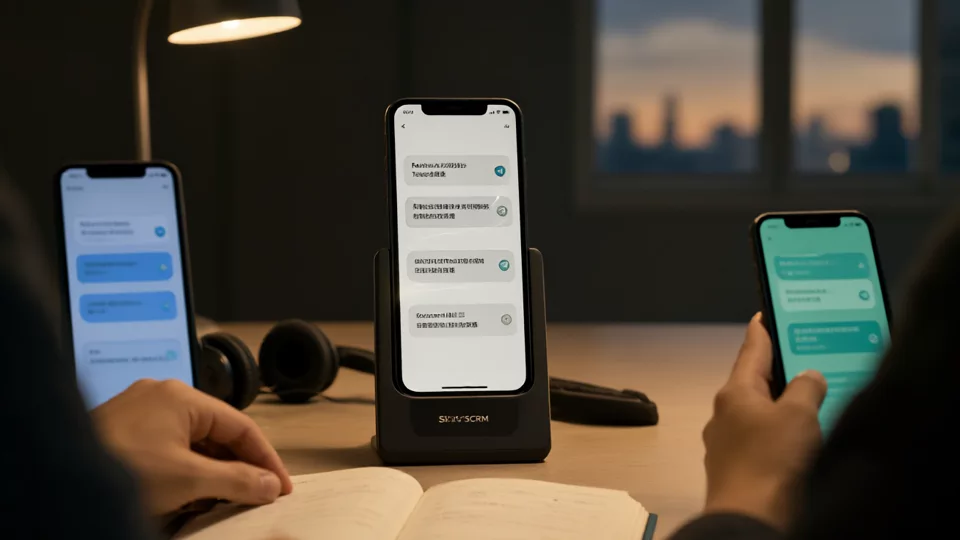
A new English inquiry just came into the Facebook Page direct messages, while two other Telegram accounts received Arabic and Indonesian messages respectively. The team can understand the content but may easily reply from the wrong account; during handover, they also have to recheck the original text, the translation, and the customer request.
The problem is usually not “whether it can be translated,” but where in the conversation chain the translation takes place.fb auto-translation, facebook two-way translation, telegram real-time translationCover different tasks such as “understanding messages,” “completing back-and-forth replies in the customer’s language,” and “real-time mutual translation in private chats.” If you operate only one platform and mainly use private chats, single-platform translation may be enough; if you also run a Facebook Page and multiple Telegram accounts, and need to keep customer language preferences, source accounts, and next-step actions, you should look at aggregated translation and customer management together.
First distinguish the three terms: which step automatic translation, two-way translation, and real-time translation each solve.
These three terms are often used interchangeably, but when trialing a tool, the most important things to confirm are: does it only solve understanding on the receiving side, or can it cover both sending and receiving; does it only happen in private chats on one platform, or can it follow accounts and customers?
| Term | Mainly solves | Easily confused boundaries |
|---|---|---|
| fb automatic translation | Automatically present received foreign-language messages as readable translations, first helping customer service understand the content. | It does not equal completing two-way replies; the reply language, retention of the original text, and conversation ownership still need to be confirmed. |
| facebook two-way translation | Around Facebook Pages or account direct messages, translate customer messages for the team to read and also help the team reply in the customer’s language. | Translating only inbound but not outbound is still one-way understanding; when running multiple Pages in parallel, you also need to confirm which Page a message belongs to. |
| Telegram real-time translation | Instantly translate incoming and outgoing messages in Telegram private chats, suited to fast-paced Q&A. | Groups, forwards, and switching between multiple accounts can mix in information from multiple people; real-time translations do not automatically become handover-ready follow-up records. |
The three are not substitutes for one another; rather, they cover different stages of a conversation. When choosing a solution, ask three questions first: which account the message comes from, who will reply in the customer's language, and who will follow up afterward.
What Facebook two-way translation really needs to address is two-way conversations in Page direct messages.
In Facebook scenarios, automatic translation often only lets the team "understand" the message. Two-way translation requires one more step: reply in the customer's language where possible, and keep the original and translated text in the same conversation. Otherwise, if a price, specification, or shipping date is mistranslated once, it is hard for the person taking over to determine what the customer actually said.
With multiple Pages and customer service staff working in shifts, another easily overlooked issue is attribution: which Page the direct message came from and who is currently replying. Sentence-level translation does not automatically solve this. When evaluating a Facebook translation solution, you can refer toFacebook translation software selection checklist, focusing on both the sending and receiving sides and conversation attribution, rather than testing only a single translated sentence.
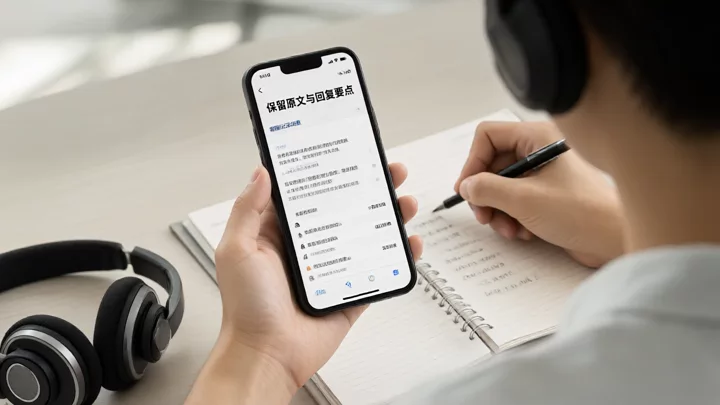
Telegram real-time translation is better suited to fast-paced private chats, but you need to prevent group and forwarded messages from losing attribution.
- Private chat Q&A:When a customer repeatedly asks about inventory, specifications, and shipping, real-time translations can shorten the time needed to understand; before replying, you still need to confirm the current account and customer identity.
- Group messages:When multiple people speak at the same time, translations can easily get mixed together; you need to identify which message comes from the target customer and must not treat group members' words as requirements.
- Forwarded messages:The original sender and the current conversation may not be the same person; this is suitable as a lead reference, but should not be used directly as the basis for a customer commitment.
- Multiple accounts in parallel:When messages from several Telegram accounts arrive at the same time, first confirm which account a reply belongs to, then handle the content; otherwise, the faster you respond, the more likely you are to reply from the wrong account.
- Follow-up records:Real-time translation solves “understanding at the moment,” but does not automatically solve “who will take over later, what language the customer prefers, and what to do next.”
If Telegram is your main customer acquisition channel, translation should be designed together with account aggregation and owner assignment. You can refer totg real-time chat translation multi-account implementation approach. The specific capability boundaries for group and forwarding scenarios should be based on the client's current documentation.
Choose by conversation stage: a decision table for single-platform translation vs. the aggregated translation workspace
Rather than comparing whether Facebook or Telegram is more important, look at where the team is stuck. The table below puts the three translation approaches back into the same customer conversation journey and provides decision guidance across four stages.
| Conversation stage | Signals that single-platform translation is sufficient | Signals that an aggregated translation workspace is needed | Recommendation |
|---|---|---|---|
| Message intake | Receiving inquiries on only one platform and one account | Messages coming in from both Facebook and Telegram, with multiple pages or accounts operating in parallel | First ensure message sources can be distinguished |
| Two-way replies | Occasionally understanding is enough, and replies can be handled manually in simple foreign language. | Need to respond consistently in the customer's language and keep both the original text and the translation. | Choose a method that covers both sending and receiving. |
| Multi-account ownership. | Customer service uses fixed accounts, with little handover. | Shift work, multiple accounts, with the same customer appearing across platforms. | Account ownership must be retained with each message. |
| Customer follow-up. | The inquiry ends after consultation, with no long-term profile created. | Need to record language preference, source account, and next action. | Consider aggregated translation plus customer management. |
If two or more of the four rows fall on the right, single-platform real-time translation can usually only serve as an auxiliary. The main workspace must be able to handle accounts, languages, and follow-up; otherwise, the faster the translation, the messier the handover.
When running multiple platforms in parallel, first use four steps to check whether the chain is closed.
- Use the same customer to run two consecutive rounds of testing.Send one message in a different language from the Facebook Page and one from Telegram, and see whether the translation distinguishes the source account; do not test only one message.
- Check both the sending and receiving ends.Check whether customer messages retain the original text with the translation available for comparison, and whether team replies can be sent in the customer's language and remain in the same conversation.
- Record language preference and source.Whether the language the customer used initially, the Facebook Page or Telegram account they came from, and who is currently following up can be recorded in the customer profile.
- Turn the conversation into a task that can be handed over.Confirm whether the next step is a quote, shipment, or continued nurturing, and whether the original text, translation, and account ownership are all carried over during handover.
These four steps can separately verify a “translation tool” and a “customer communication system.” SKY SCRM is positioned as aggregated translation and customer management, supporting multi-account management across global social platforms, multilingual communication, AI translation, and customer management; specific platform compatibility and capability scope are subject to the client andthe current official website descriptionshall prevail. When multiple platforms run in parallel, the value of aggregation is not piling messages together, but ensuring that the source account, language preference, and follow-up status are not lost; for relevant implementation points, seeKey points of Telegram customer service systems and message aggregation.
Frequently asked questions
When a customer replies in a foreign language, must the original text always be retained?
It is recommended to retain it. The original text is the basis for verifying the customer's actual wording, while the translation is for understanding. If only the translation is kept, it becomes difficult after handover to determine which parts are the customer's exact words, and content such as prices, specifications, and commitments especially needs side-by-side comparison.
Can translations in Telegram groups be used directly as customer follow-up records?
It is not recommended to use them directly. Group messages mix statements from multiple people, and forwarded messages may also change the original sender. Follow-up records should at least correspond to a specific customer, source account, and next action; group translations are more suitable as lead references.
When operating Facebook and Telegram at the same time, is it necessary to use two tools?
Not necessarily. When there are few accounts and low message volume, single-platform translation plus manual records can also work; however, when multiple pages and multiple Telegram accounts run in parallel and shift handovers are required, separate tools can easily lose account attribution and language preferences, so an aggregated translation plus customer management solution can be evaluated.
What boundaries should be verified first during the trial?
First verify whether the source account is retained with the message, whether two-way replies cover both the sending and receiving sides, whether customer language preferences can be recorded, and whether conversations can be turned into follow-up tasks. Then review scenarios such as group chats, forwarding, and multi-account switching, rather than judging solely by single-sentence translation.