





DMs arrive simultaneously on three Twitter accounts: one asks about shipping time in English, one asks about specifications in Spanish, and one sends a screenshot directly in Arabic. The translations take only a few minutes to understand, but the trouble comes after understanding—someone replies from the wrong account, the same customer returns with a different handle and is treated as a new customer, and the colleague taking over sees only the Chinese translation, without knowing what the source text said or what the previous agent had promised.
The problem is not whether the translation is accurate.transquickly This type of third-party translation tool solves “what does this sentence mean?”; it is not responsible for remembering who this message belongs to. Customer management must add three other judgments: which account the message belongs to, whether this person is the same person, and who takes over next. The following sections follow a Twitter DM from arrival to handover and discuss customer management points across multiple Twitter accounts, without touching on the price or results of any third-party tool.
First, draw a clear boundary: transquickly handles understanding; customer management handles attribution.
People searching for terms such as 007出海系统 and Twitter translation software often have mixed needs: some only want to understand a single sentence, while others want to connect multilingual DMs across multiple accounts into conversations they can follow up on. These two things are separate at the tool level.
A translation tool produces translations that arise with the conversation and can easily disappear with it; customer management produces records—account attribution, customer identity, language preference, historical requests, and next actions—that need to be written down and seen by the next colleague. Treating “understanding” as “follow-up completed” has a typical consequence: three days later, the customer asks, “Is the price we discussed last time still valid?” and the team has to search through the records from the beginning. SKY SCRM is positioned as aggregated translation and customer management, bringing multi-account messages from global social platforms together for multilingual communication and customer management; the translation layer can be handled by different tools, but the attribution and record-keeping layer cannot be omitted. For similar breakdowns for other platforms, see How to implement real-time translation chat on Instagram.
The three places where a Twitter DM is most likely to break down
Most breakdowns occur at one of these three points; you can first compare your own situation to pinpoint where it fits.
| Point of failure | Common symptoms | Information to retain in customer management |
|---|---|---|
| Account ownership | DMs from multiple accounts are mixed in one place, and the wrong account is selected when replying | Receiving account, account owner, and account linked to the conversation |
| Identity identification | The same customer comes back in a different language or from a different account and is treated as a new customer and asked all over again | Platform account, contact details, source batch, language preference |
| Record handover | When handing over, only one translated sentence is passed on; the original text, tone, and commitments are all lost | Original text, translation, key requests, commitments made, next steps |
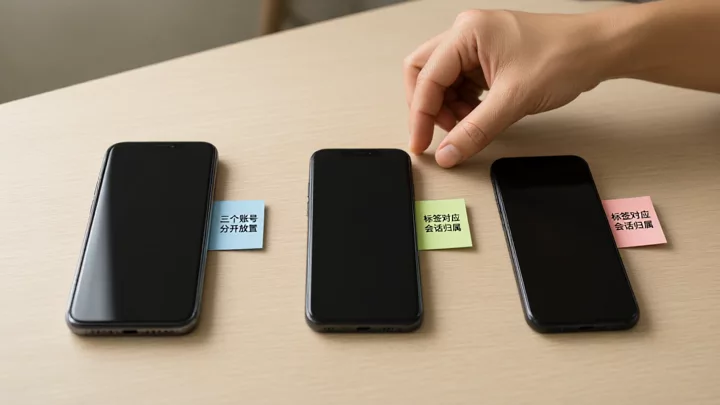
When a message arrives, record the account first, then translate
Sequence matters more than tools. The order below can prevent most rework in multi-account scenarios
- First confirm the receiving account: the first thing to do when a message arrives is to see which Twitter account it landed on. The account determines the reply approach and the conditions you can commit to
- Keep the original text and mark the language: the original text is the only basis for complaint review and semantic disputes, and the language tag determines the subsequent translation and the default reply language
- Then generate the translation: place the translation next to the original for understanding; do not overwrite the original, and do not just copy the translation elsewhere
- Determine the customer identity: whether this is a new customer or one with an existing record. If a record exists, attach it to the existing profile; if not, decide whether to create a new one based on the record-creation criteria
- Write down the next step: who owns it, when they will reply, and what they need to reply with — one sentence, in the same place, rather than left in someone's memory.
Steps 2 and 3 are the easiest to get backwards: first use a translation tool to understand what was said, then throw the original away — by the time you need to check whether the customer said “two weeks” or “two days,” there is nothing left to check.
When the same customer shows up across languages and across accounts, how do you decide whether to merge them?
It is common for the same company to ask about pricing from two accounts, or for the same person to come back in a different language. Judge merge criteria in the order below — the earlier the item, the stronger the evidence:
- Same platform account: if the @handle is identical, it can basically be treated as the same entity — attach it directly to the existing profile.
- Same contact details: different handles but the same email address, phone number, or other platform account — merging is acceptable, but confirm manually once before you merge.
- Same source: the same campaign batch, the same referrer, or the same campaign link — useful as a reference, but not enough to decide on its own.
- Same language preference and consistent past requests: the same language and the same model request count only as supporting clues.
- What cannot be used as evidence: display name, avatar, and region. Duplicate names are common, avatars can be copied outright, and a mistaken merge tangles two customers together — harder to untangle than leaving them separate.
After merging, keep the original account list and note clearly which account the customer first came in from and which account they mainly use now; otherwise lead counts by account will not add up.
Translations must be kept alongside the original text for follow-up records to be meaningful
Storing only the translation saves effort in the short term but costs a great deal when something goes wrong: the customer says “I clearly asked for the address to be changed,” and all you have is a Chinese paraphrase — no way to trace it back. In the customer profile, the original text, the translation, the language tag, and the key requests extracted from them should be stored side by side, rather than treating the translation as a substitute for the original. This ties in with How customer profiles are built up in the management system It follows the same logic: fields should follow the customer, not an individual's chat window.
When applied to Twitter conversations, the profile should contain at least the original snippet, the corresponding translation, the customer's language, the current request, commitments made, and the person responsible for the next step. What is carried over during handoff is this set of fields, not a line like “The customer is asking about pricing—you reply.” The same set of criteria applies in how the Telegram lead-generation ticket process is managedas well; only the platform changes.

Not every direct message requires a customer profile: set trigger conditions for creating a profile and for handoff
Once the customer list is inflated by invalid leads, the people who actually need follow-up get buried. You can handle this by tiering conversations by their nature:
- Price inquiries, specification questions, requests for a quote, and stock confirmation: create a profile and note the model and requirements.
- After-sales, returns and exchanges, and complaints: create a profile and convert it into a ticket; the original text must travel with the ticket.
- Wholesale, agency, and partnership: create a profile and flag it separately; state the other party's identity during handoff.
- Only asks about price in one sentence without clarifying needs: keep a conversation record first, and create a card only after the needs are clear.
- Likes, one-line greetings, obvious ads, or harassment: keep a conversation record only, and do not create a card.
When choosing tools, also check against this chain: whether account ownership, identity recognition, and record transfer connect properly.How to choose facebook translation softwareThe checklist in it can be used directly for comparison, because it is the same thing that needs to be verified.
Frequently asked questions
Can transquickly replace a customer management system?
No. It addresses the language understanding layer; account ownership, identity merging, and follow-up records are outside its scope. Even after understanding the translation, you still need a place to connect messages, customers, and next steps.
If the same customer asks with two Twitter accounts, should they be merged?
Check the @handle first, then the contact information. If the two accounts leave the same email or other platform account, they can be merged, but confirm manually once before merging; do not merge based only on similar display names or avatars.
If a customer switches languages midway, how should language preferences be recorded?
Record them as a set rather than a single value: original language, current communication language, and acceptable reply language. When a customer switches from Spanish to English, keep Spanish as the original language in the profile, and determine the reply language based on the current conversation.
When a small team hands over a Twitter conversation, what is the minimum information that should be kept?
The receiving account, customer identifier, source text and translation, current request, commitments already made, next action, and owner. If any one of these is missing, whoever takes over will have to ask again.
What problems arise if only the translation is kept and not the source text?
There is no basis for semantic disputes, complaint reviews, or internal reconciliation; if a customer says “I never said that,” there is no way to trace it back; and during handover there is no way to judge whether the translation omitted a condition, a tone, or a number.